
Powerful Data-Driven Strategies to Increase Your Business Revenue
In our previous blog, “How Data Analytics Increases Your Business Revenue,” we explored how businesses can use data-driven strategies to improve growth, optimize performance, and increase revenue.
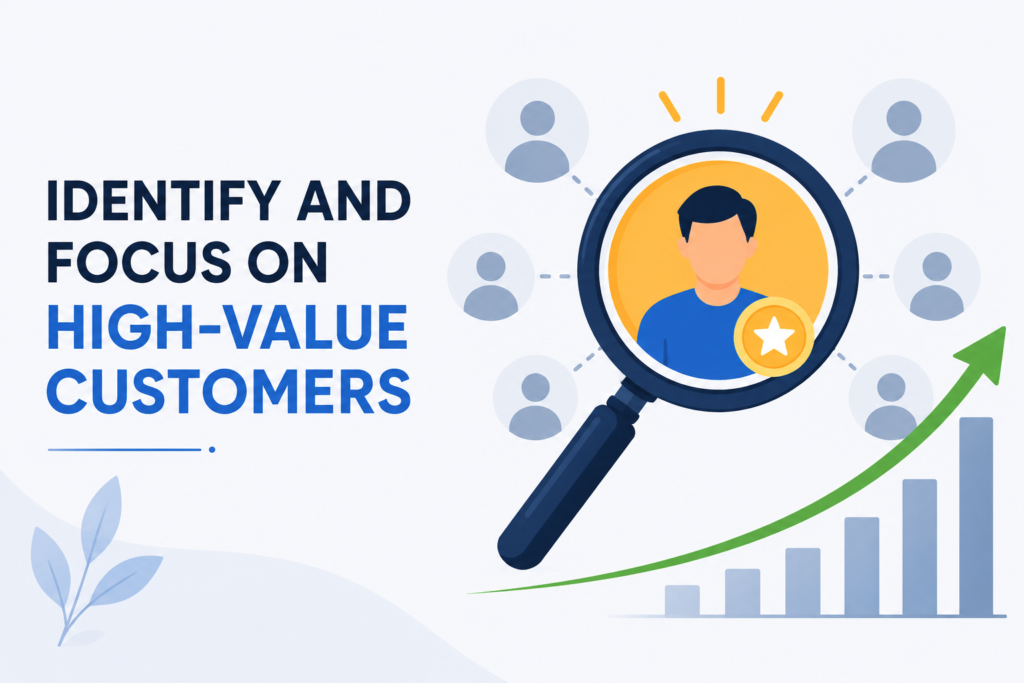
Identify and Focus on High-Value Customers
One of the most effective ways to increase revenue is by focusing on customers who contribute the most to your business. Many companies treat all customers equally, but data shows that a small percentage of customers usually generate the majority of revenue. By analyzing customer purchase history, frequency, and lifetime value, businesses can prioritize the right audience.
Instead of spending equally on all segments, businesses should allocate more resources toward retaining and expanding relationships with high-value customers. This approach not only increases revenue but also reduces customer acquisition costs over time. Data analytics helps in identifying patterns that are not visible through manual observation, enabling smarter targeting and personalization.
Key actions:
- Segment customers based on revenue contribution
- Identify repeat purchase patterns
- Calculate customer lifetime value (CLV)
- Focus retention strategies on top-performing customers
- Offer personalized deals and recommendations
- Reduce spending on low-value segments
- Track engagement and behavior regularly
Optimize Marketing Spend Using Data
Marketing is one of the largest expenses for most businesses, yet a significant portion of it is often wasted due to lack of tracking and analysis. Data-driven marketing ensures that every rupee spent contributes to measurable outcomes. Instead of relying on assumptions,
businesses can use analytics to understand which campaigns, channels, and messages are delivering results.
By continuously monitoring campaign performance, businesses can quickly identify underperforming areas and reallocate budgets to high-performing channels. This not only improves return on investment but also ensures that marketing efforts are aligned with business goals. Over time, this approach builds a highly efficient marketing system driven by data rather than guesswork.
Key actions:
- Track return on investment (ROI) for each campaign
- Identify top-performing marketing channels
- Analyze customer acquisition cost (CAC)
- Stop or optimize low-performing campaigns
- A/B test different creatives and messaging
- Monitor conversion rates regularly
- Use dashboards for real-time insights
- Align marketing goals with revenue targets
Improve Conversion Rates Through Funnel Analysis
Generating leads is not enough if they are not converting into paying customers. Many businesses lose potential revenue because they do not understand where customers drop off in the sales funnel. Data analytics provides visibility into each stage of the funnel, helping businesses identify weak points and optimize them.
By analyzing user behavior, businesses can understand what is preventing conversions—whether it is pricing, user experience, or communication gaps. Improving even a single stage of the funnel can significantly increase overall revenue without increasing traffic or marketing spend. This makes funnel optimization one of the highest ROI strategies in data analytics.
Key actions:
- Map the complete sales funnel
- Identify drop-off points at each stage
- Analyze user behavior and interaction data
- Improve landing page performance
- Optimize pricing and offers
- Strengthen follow-up processes
- Test different funnel variations
- Monitor conversion rate improvements

Use Predictive Analytics for Better Planning
Most businesses operate reactively, making decisions based on past performance without forecasting future trends. Predictive analytics changes this approach by using historical data to estimate future outcomes. This allows businesses to prepare in advance and make proactive decisions.
With accurate forecasting, businesses can manage inventory, plan marketing campaigns, and allocate resources more effectively. It also reduces the risk of overstocking or stock shortages, both of which impact revenue and costs. Predictive analytics provides a competitive advantage by enabling businesses to act before market changes occur.
Key actions:
- Analyze historical sales data
- Forecast future demand trends
- Plan inventory based on predictions
- Identify seasonal patterns
- Adjust pricing strategies dynamically
- Allocate resources efficiently
- Monitor forecast accuracy regularly
Increase Revenue Through Upselling and Cross-Selling
Existing customers are more likely to buy again compared to new customers. Data analytics helps businesses identify opportunities to increase revenue from current customers through upselling and cross-selling. By analyzing purchase behavior, businesses can recommend relevant products or services at the right time.
This strategy not only increases average order value but also improves customer satisfaction by offering personalized recommendations. When done correctly, it feels helpful rather than promotional. Data plays a crucial role in ensuring that recommendations are accurate and timely, leading to higher acceptance rates.
Key actions:
- Analyze product purchase patterns
- Recommend complementary products
- Create bundled offers
- Personalize recommendations based on behavior
- Target repeat customers with special offers
- Use email and CRM data for targeting
- Track effectiveness of upselling strategies

Reduce Costs by Identifying Inefficiencies
Revenue growth is not only about increasing sales; it is also about improving profitability by reducing unnecessary costs. Many businesses lose money due to inefficiencies that go unnoticed without proper data analysis. Data analytics helps identify these hidden inefficiencies across operations, marketing, and resource allocation.
By analyzing cost-related data, businesses can pinpoint areas where money is being wasted and take corrective actions. This leads to better utilization of resources and improved profit margins. Over time, even small optimizations can result in significant financial gains.
Key actions:
- Identify high-cost, low-return activities
- Optimize operational workflows
- Reduce manual processes through automation
- Monitor resource utilization
- Eliminate redundant expenses
- Track cost vs output regularly
- Improve team productivity using data insights
Implement the Right Tools and Technology
The success of data-driven strategies depends heavily on the tools used to collect, process, and visualize data. Without the right tools, even valuable data cannot be utilized effectively. Businesses should invest in tools that simplify data analysis and provide clear insights.
Modern tools allow businesses to automate reporting, create dashboards, and handle large datasets efficiently. This reduces manual effort and ensures accuracy. The right technology stack enables businesses to scale their analytics capabilities as they grow.
Key actions:
- Use Excel for basic analysis and reporting
- Implement Power BI or Tableau for dashboards
- Use SQL for data extraction and management
- Leverage Python for large data processing
- Automate repetitive reporting tasks
- Ensure data accuracy and consistency
- Integrate multiple data sources
- Train teams to use tools effectively

How Precious Infosystem Helps You Turn Data Into Revenue
Implementing data-driven strategies is not just about having tools—it requires the right expertise, structure, and execution. This is where the Precious Infosystem plays a critical role. We help businesses move beyond raw data and build systems that directly contribute to revenue growth and operational efficiency.
Our approach is practical and results-focused. We begin by understanding your business model, current challenges, and goals. Based on this, we design a customized data strategy that aligns with your revenue objectives. Instead of overwhelming you with complex reports, we focus on delivering clear, actionable insights that your team can actually use.
We also ensure that your data is clean, structured, and centralized, so you get a complete view of your business performance. From dashboards to automation, everything is built to support faster decision-making and long-term scalability.
What we deliver:
- Business-specific data analytics strategy aligned with revenue goals
- Interactive dashboards using Power BI and advanced Excel
- Data cleaning, structuring, and automation workflows
- Sales and marketing performance tracking systems
- Customer behavior and segmentation analysis
- Predictive insights for planning and forecasting
- Centralized reporting for better visibility
- Ongoing support to improve decision-making processes
Conclusion
Data-driven strategies are not optional anymore—they are essential for sustainable business growth. Companies that rely on data make faster decisions, reduce risks, and identify opportunities more effectively.
The key is not just collecting data, but using it strategically across all business functions. When implemented correctly, these strategies directly impact revenue, profitability, and long-term scalability.
Get In Touch Today
Share your requirements and book a free consultation. We’ll respond within 1 business day.
Contact us Anytime at – contact@preciousinfosystem.com
In the next blog, we will cover “How to Collect and Integrate Data for Better Business Decisions” and explore how businesses can centralize and manage data for smarter decision-making.
